Phlox Energy
1 / 1
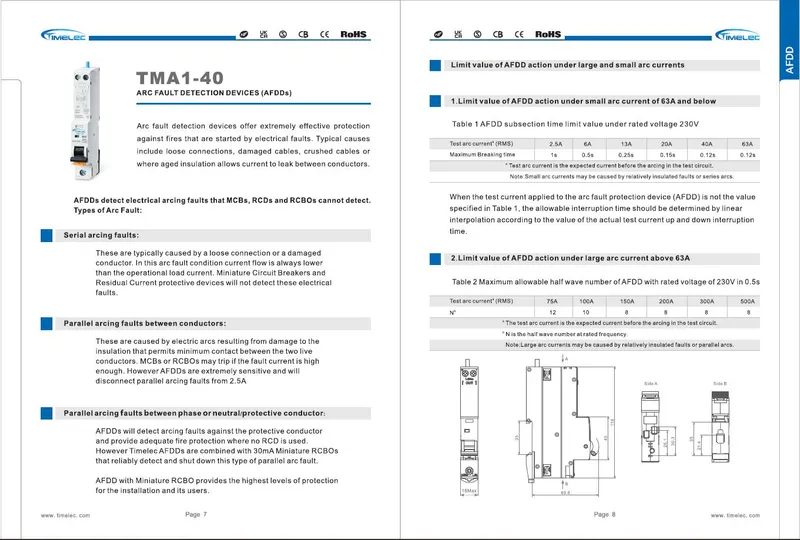
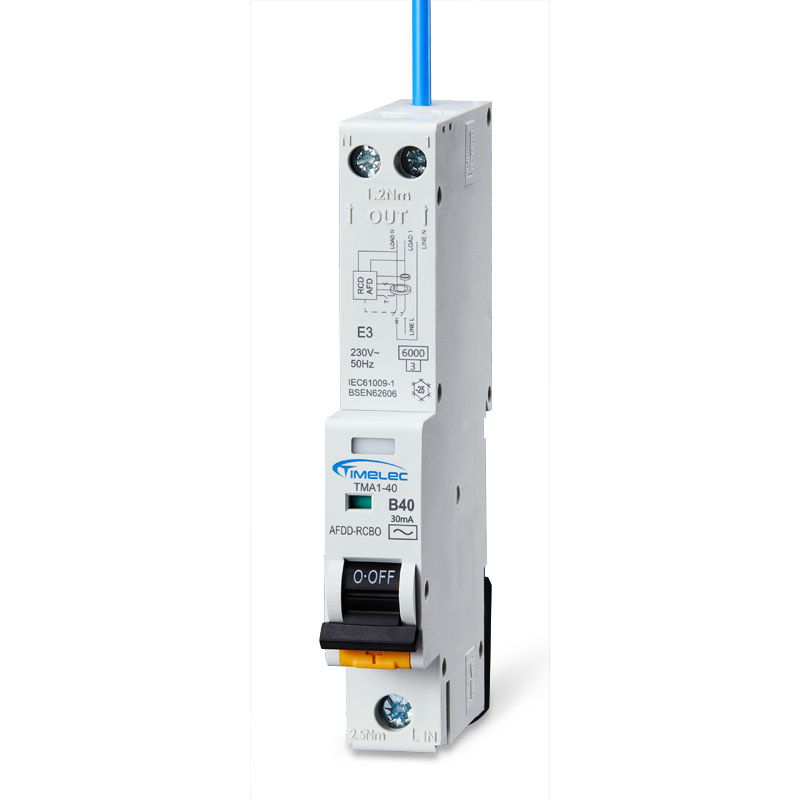
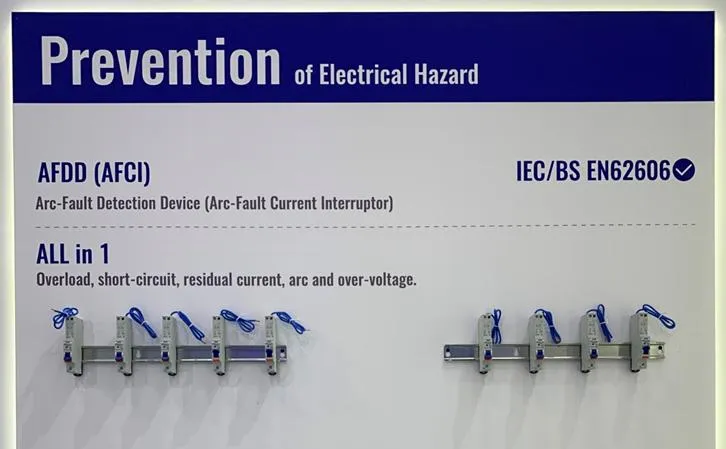
Immerse yourself in unrivaled safety and reliability with our AFDD, or Arc-Fault Detection Device. Known as AFCI in North America, this device is meticulously designed to meet the esteemed IEC/BS EN 62606 standards, offering you peace of mind like never before.
In the realm of circuit protection, a comprehensive range of protective devices is essential. MCBs excel in delivering exceptional short-circuit and overload protection, while advanced RCDs (RCCB) provide robust residual current protection. However, traditional methods only go so far, as electric arcs ignite an alarming 90% of electrical fires. Enter the AFDD—your essential protector against arcs—safeguarding lives and properties with unparalleled effectiveness and efficiency.
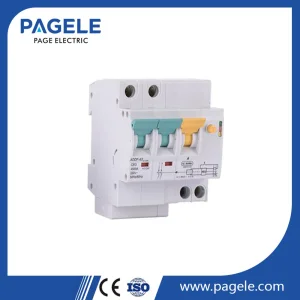
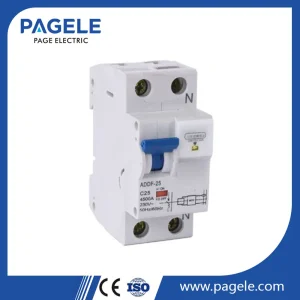
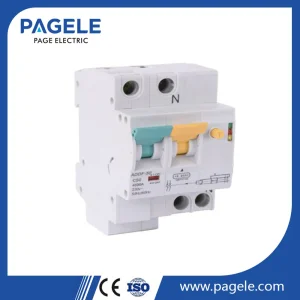
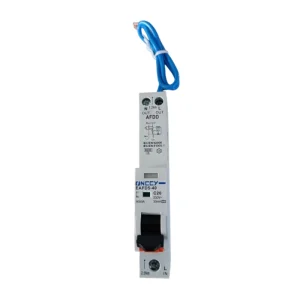
Unveiling the groundbreaking all-in-one device that seamlessly integrates AFDD and RCBO functionalities. It ensures complete protection against short-circuit, overload, residual current, arc, and over-voltage threats, strictly adhering to the rigorous standards of IEC/BS EN 62606 and IEC/BS EN 61009-1. This sophisticated device intelligently distinguishes between benign and dangerous arcs, autonomously cutting off the circuit when detecting loose connections that could otherwise evolve into hazardous fires, especially in older home wiring.
| Product category | CIRCUIT BREAKER | ||
| Product type | ARC FAULT DETECTION DEVICES (AFDDs) | ||
| Product model | TMA3-40 | ||
| Unique selling proposition | With AFD+RCBO protection With Over-vol. protection Total length, 115mm |
||
| Technical data | Standard | IEC/EN 62606 & IEC 61009-1 | |
| Electrical features | Rated current (In) | 6A, 10A, 16A, 20A, 25A, 32A, 40A | |
| Trip curve | B, C, D | ||
| Model | Electronic | ||
| RCD Type | AC, A | ||
| Pole | 1P+N | ||
| Rate voltage (Ue) | 240V | ||
| Insulation voltage (Ui) | 500V | ||
| Rated frequency | 50Hz | ||
| Energy limiting class | 3 | ||
| Rated residual operating current (IΔn) | 30mA, 100mA, 300mA | ||
| Rated breaking capacity (Icn) | 6KA | ||
| Rated operating short circuit breaking capacity (Ics) | 6KA | ||
| Rated residual making and breaking capacity(IΔm) | 2000A | ||
| Mechanical features | Rated impulse withstand voltage (Uimp) | 4KV | |
| Surge current resistance / at (8/20) μs | 3KA | ||
| Overvoltage protection | 270V-300V | ||
| Electrical life | 4,000 | ||
| Pollution degree | 2 | ||
| Mechanical features (Cont.) | Mechanical life | 20,000 | |
| Protection degree | IP20 | ||
| Ambient temperature (with daily averages ≤35°C) | -25°C to +40°C | ||
| Storage temperature | -25°C to +70°C | ||
| Installation | Terminal connection type | Cable, busbar | |
| Connection capacity (input) | 25mm² | ||
| Connection capacity (output) | 16mm² | ||
| Tightening torque (input) | 2.5Nm | ||
| Tightening torque (output) | 1.2Nm | ||
| Mounting | 35mm DIN rail | ||
Visible plasma discharges caused by electrical current passing through a normally nonconductive medium, such as air. It is caused when the electrical current ionizes gases in the air. The temperature can exceed 600 ºC, which is sufficient to start a fire. About 20% of fires are associated with electrical distribution or other electrical appliance faults.
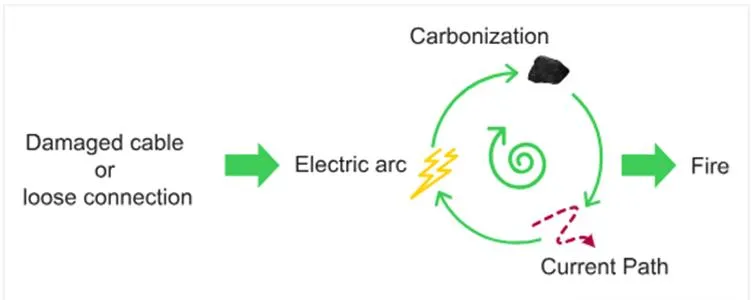
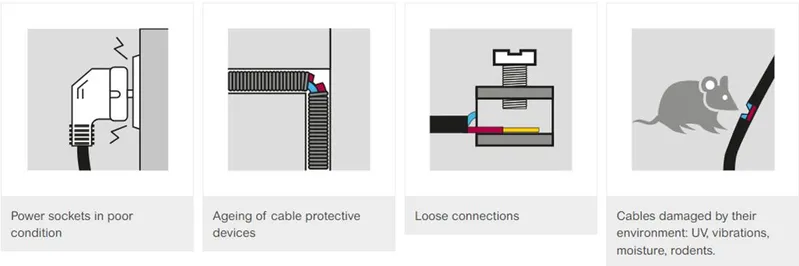
An arc is created when the electrical current jumps between two conductive materials. The two main types of arcs are Serial Arc and Parallel Arc. Common causes include worn contacts in electrical equipment, damage to insulation, breaks in cables, and loose connections.
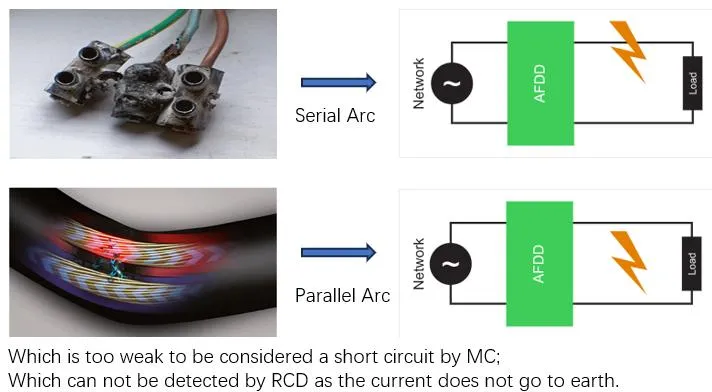
An AFDD is a protective device installed in consumer units to provide protection from arc faults. It uses microprocessor technology to analyze the waveform of the electricity being used to detect any unusual signatures which would signify an arc on the circuit. It will cut off the power to the affected circuit and prevent potential electrical fires.
Yes, it is highly recommended where there is an increased risk of fire.
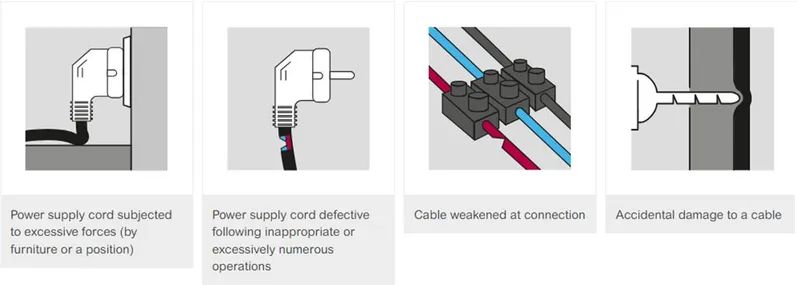
According to IEC 60364 - Electrical installations of buildings Part 4-42:
Arc Fault Detection Devices are designed to limit fire risks caused by the presence of arc fault currents in the final circuits of a fixed installation. They are installed in electrical switchboards to protect circuits supplying power sockets and lighting, and are especially recommended in cases of renovation.
More specifically, the installation of the AFDD is highly recommended to protect circuits with the highest risk of fire, such as:
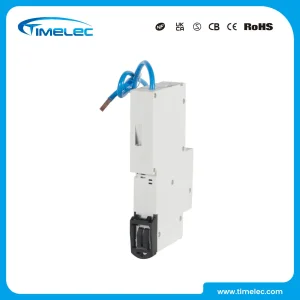
Discover the ingeniously compact design of the AFDD (AFCI), with a sleek overall length of just 115mm, expertly crafted to fit seamlessly into any space. Though modest in size, this device delivers steadfast protection and top-tier performance, ensuring uncompromised security and reassurance.
The AFDD epitomizes the pinnacle of comprehensive protection for both residential and commercial environments, providing unparalleled peace of mind.
We offer an extensive array of customization options:



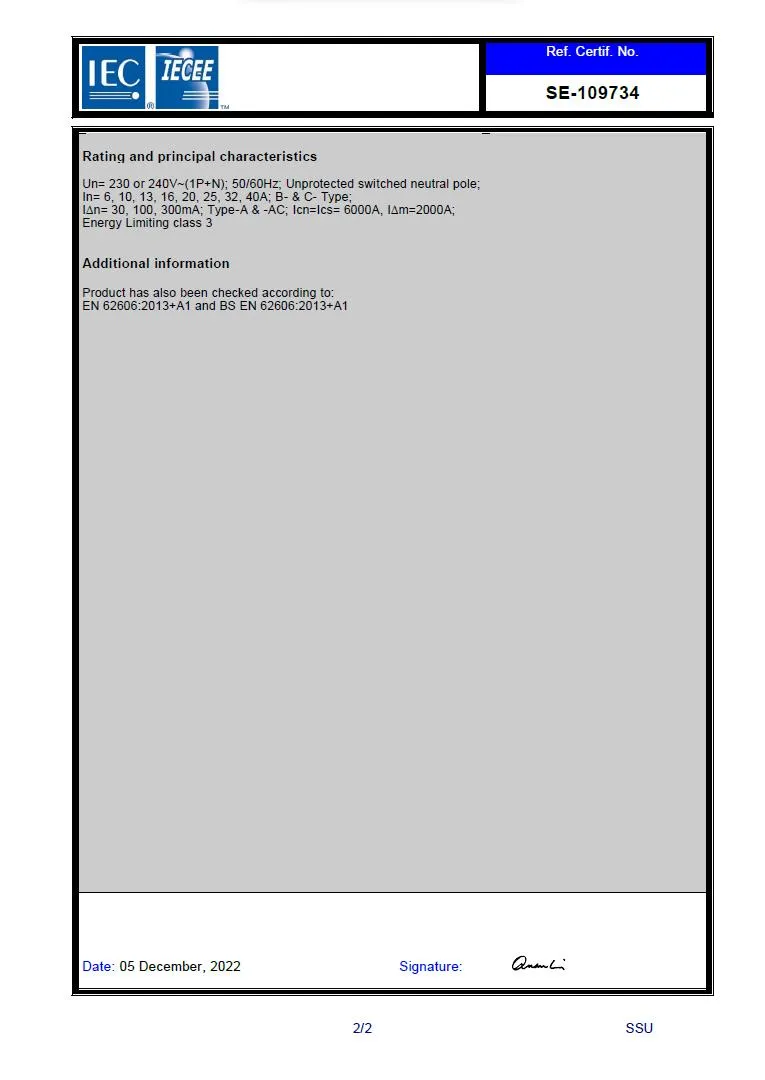
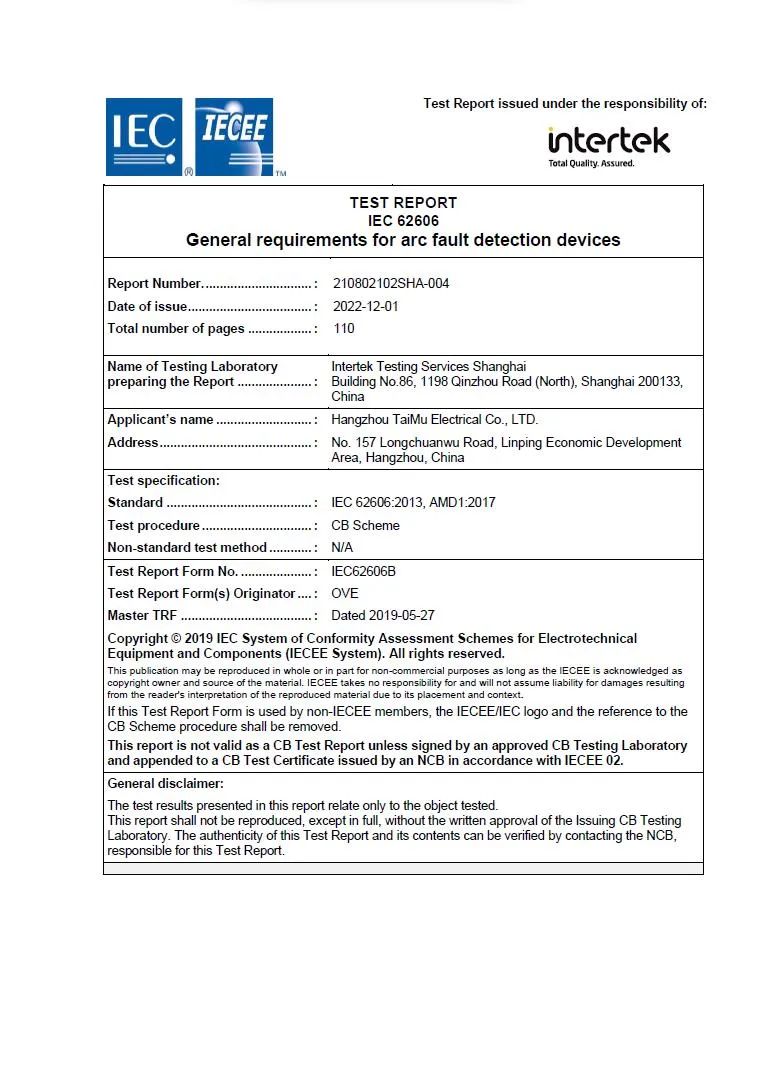

Each product is ensconced in an elegant white gift box, with one unit per box, ensuring a premium unboxing experience that delights.



For bulk orders, our sturdy yellow carton box accommodates up to 60 units per carton, optimizing storage and transportation efficiently.
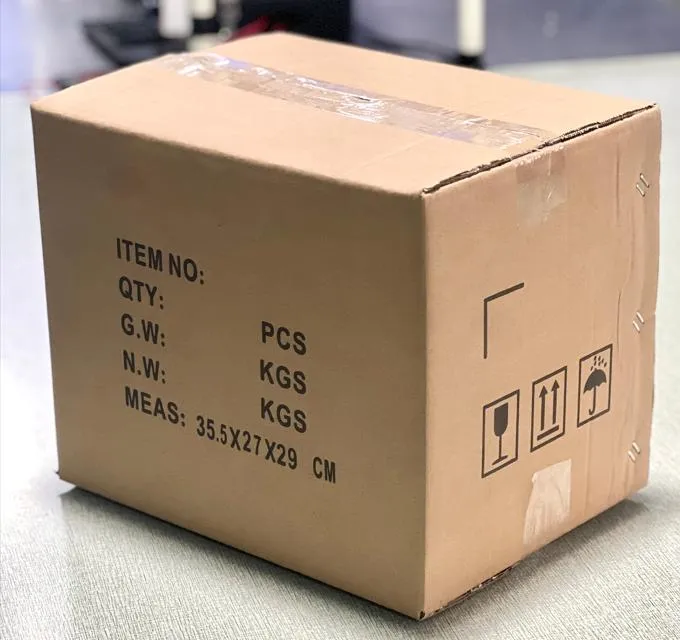
Within our distribution network, we prioritize secure packaging through: