When exploring "what is the difference between a fuse and a circuit breaker", industry experts like John Doe, an electrical engineering specialist, offer valuable insights. He states, "Understanding these devices is crucial for any safe electrical system." A fuse and a circuit breaker serve similar purposes, but their mechanisms differ significantly.
Fuses are simple devices that interrupt current flow when it exceeds a certain level. They contain a thin wire that melts, breaking the circuit. Conversely, circuit breakers can be reset after tripping. They use electromagnetic or thermal mechanisms to cut off current when a fault occurs. This difference is essential for safety and convenience.
Many homeowners remain unaware of these distinctions. Not every household needs both devices. Some rely solely on fuses, while others opt for circuit breakers. Nevertheless, making the right choice can prevent electrical fires and appliance damage. Engaging with experts can clarify which option suits individual needs. Knowledge is power, especially when it pertains to electrical safety.
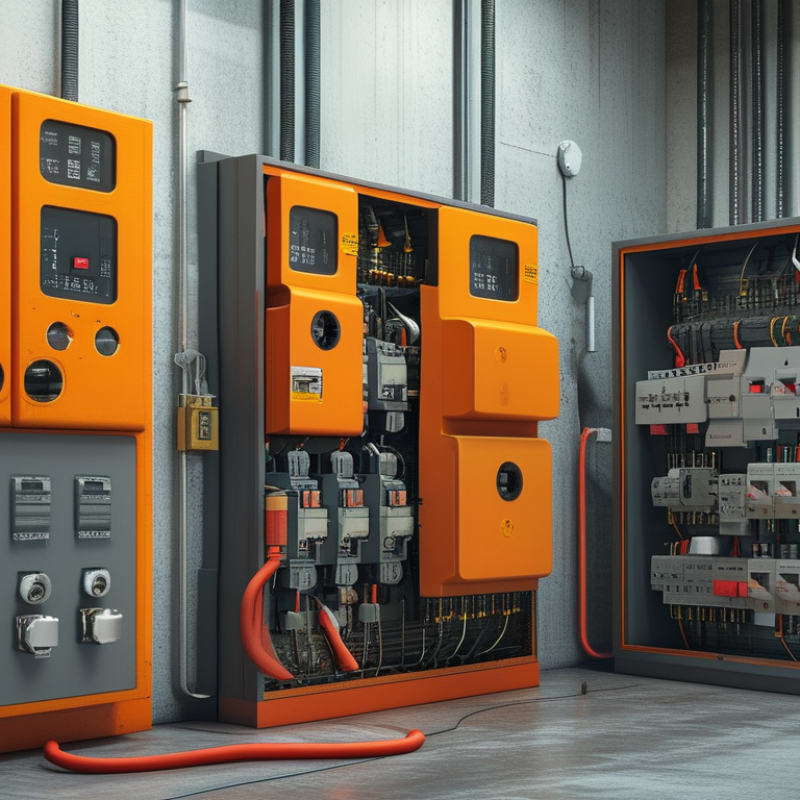
What Are Fuses and Circuit Breakers? A Basic Overview
Fuses and circuit breakers are essential components in electrical systems.
They prevent overcurrent, which can lead to overheating and potential fires.
A fuse contains a thin metal wire that melts when excessive current flows.
On the other hand, a circuit breaker uses an electromechanical mechanism to interrupt the circuit.
According to the National Fire Protection Association, electrical failures contribute to nearly 13% of all residential fires.
Fuses tend to be simpler and less expensive.
However, their single-use design means they need replacing after blowing.
In contrast, circuit breakers can be reset after tripping.
This makes them more convenient in many situations.
A 2022 report by the Electrical Safety Foundation International indicates that circuit breakers are preferred in 70% of new installations due to their reliability.
Despite their advantages, both fuses and circuit breakers have limitations.
A fuse may blow at inconvenient times, causing disruption.
Circuit breakers may trip too frequently if they are mismatched to the load.
Electrical safety requires understanding these devices.
Knowing when to use either can enhance home safety and reduce risks.
Proper installation and awareness are crucial to preventing electrical hazards.
The Functionality of Fuses: How They Protect Electrical Circuits
Fuses play a crucial role in protecting electrical circuits from overloads and short circuits. When excessive current flows through a fuse, it melts, breaking the circuit. This process is fast and efficient, providing immediate protection. It's estimated that using fuses can reduce the risk of electrical fires in homes by up to 30%, according to industry reports.
The design of fuses makes them simple yet effective. They come in various forms, such as blade and cartridge types, each suited for specific applications. While fuses are reliable, they do have limitations. Once blown, a fuse must be replaced, unlike circuit breakers that can simply be reset. This can be inconvenient in situations with frequent surges. In some cases, a blown fuse might not indicate an issue in the system, leading to unnecessary replacements.
Additionally, regular maintenance is essential for optimal fuse function. Over time, connections may corrode, affecting performance. Monitoring the environment where fuses are installed is vital. Factors like humidity and temperature can impact their reliability. Relying solely on fuses without understanding their limitations may result in repeated issues, underscoring the need for periodic assessments.
Comparison of Fuse and Circuit Breaker Functionality
This chart displays the average response time in milliseconds and the reset mechanism complexity on a scale from 1 to 10 for fuses and circuit breakers. Fuses typically respond faster but lack the reset capability that circuit breakers offer.
Circuit Breakers Explained: Types and Mechanisms in Use
Understanding circuit breakers is essential for electrical safety. These devices protect circuits from overloads and short circuits. Unlike fuses, which must be replaced after blowing, circuit breakers can be reset. This feature contributes to their popularity in modern electrical systems.
There are several types of circuit breakers. Miniature circuit breakers (MCBs) are commonly used in residential applications. They trip automatically when excessive current flows, helping to prevent damage to wires. According to a 2021 report from the Electric Safety Foundation International (ESFI), MCBs can reduce the risk of electrical fires by up to 70%. Another type, Residual Current Circuit Breakers (RCCBs), detects earth faults. They can save lives by preventing electric shocks.
Understanding the mechanisms at play is vital. Circuit breakers operate using thermal and electromagnetic principles. This ensures that rapid and accurate tripping occurs in dangerous situations. However, many users do not regularly test their circuit breakers. A survey found that 40% of homeowners are unaware of this maintenance requirement. Such negligence could lead to serious safety hazards. Keeping circuit breakers in good working order is not just advisable; it is essential for protecting lives and property.
Key Differences Between Fuses and Circuit Breakers in Safety
When examining the key differences between fuses and circuit breakers, safety should be paramount. Fuses consist of a thin wire that melts and breaks the circuit when overloaded. According to industry reports, approximately 40% of electrical fires are caused by faulty fuses. This highlights the importance of understanding how fuses operate and their limitations. They need to be replaced after a blow, which can lead to delays in restoring power.
In contrast, circuit breakers use an electromechanical switch to interrupt the flow of electricity. They automatically reset after a fault has been resolved. Data from the National Fire Protection Association (NFPA) suggests that buildings equipped with circuit breakers experience 30% fewer electrical fires compared to those using fuses. However, circuit breakers can sometimes trip unnecessarily, leading to frustration and confusion for users.
Both devices have their strengths and weaknesses. Fuses are simpler and less expensive, but they require replacement, which can lead to safety concerns. Circuit breakers offer convenience and improved protection but may not always be reliable under certain conditions. Understanding these differences is crucial for making informed decisions about electrical safety.
Industry Standards: When to Use Fuses vs. Circuit Breakers
When deciding between fuses and circuit breakers, several factors come into play. Both are safety devices designed to protect electrical systems from overload and short circuits. Fuses contain a thin wire that melts to break the circuit, while circuit breakers can be reset after tripping. The choice often hinges on specific applications and industry standards.
In residential settings, circuit breakers are commonly used. They offer convenience, allowing homeowners to reset them easily after a trip. In industrial applications, fuses may be preferred for their reliability and simplicity. The decision to use one over the other often depends on the critical nature of the equipment. Circuit breakers provide a quick response but can wear out over time. Fuses offer a consistent performance but need replacement after each fault. Understanding the unique requirements of each environment is essential.
Additionally, consider the potential for user error. Circuit breakers might tempt users to reset without checking the cause of a trip. This can lead to further issues down the line. Fuses, while safer in that regard, require attention to the exact type needed. Mismatching a fuse can risk equipment damage. Evaluate the needs of your system carefully and prioritize safety in your choices.
What is the Difference Between a Fuse and a Circuit Breaker?
| Feature |
Fuse |
Circuit Breaker |
| Definition |
A fuse is a safety device that melts to interrupt a circuit when it is overloaded. |
A circuit breaker is a switch that automatically interrupts the circuit when it detects a fault. |
| Resetting |
Needs to be replaced after operation. |
Can be reset after tripping. |
| Response Time |
Typically responds faster than circuit breakers. |
Response time can vary significantly based on design. |
| Maintenance |
Minimal, needs replacement when blown. |
Regular testing recommended for reliability. |
| Cost |
Generally cheaper than circuit breakers. |
Typically more expensive due to their complexity. |
| Applications |
Commonly used in older installations and specific applications. |
Widely used in residential and commercial buildings. |
FAQS
: Fuses protect circuits from overloads and short circuits. They melt when excessive current flows, breaking the circuit.
Fuses must be replaced after use, while circuit breakers can be reset. Both protect against overloads effectively.
Over time, connections can corrode. This can affect performance. Regular checks ensure optimal function and safety.
Once blown, a fuse is unusable. This can be inconvenient. It may also lead to unnecessary replacements if blown without cause.
Circuit breakers are common in homes. They allow easy resetting after a trip, making them user-friendly.
Yes, users might reset without understanding the trip's cause. This can lead to further electrical issues over time.
Consider the application needs, reliability, and potential user error. Each scenario may require a different choice for safety.
Factors like humidity and temperature can affect reliability. It’s important to monitor conditions where fuses are installed.
Conclusion
Understanding the difference between a fuse and a circuit breaker is essential for ensuring electrical safety in any setting. Fuses are simple devices that protect circuits by melting a metal strip when excessive current flows through it, effectively breaking the circuit. In contrast, circuit breakers are more advanced, automatically interrupting the electrical flow when an overload is detected and can be reset once the issue is resolved.
The key differences between fuses and circuit breakers lie in their functionality and safety features. Fuses provide a one-time protection mechanism, requiring replacement after activation, while circuit breakers can be reset and reused, offering more convenience. Additionally, industry standards dictate specific applications for each, guiding users on when to employ fuses versus circuit breakers to maximize safety and efficiency in electrical systems.

 Phlox Energy